
Recent Posts
- Why Manifestation Feels So HardJanuary 29, 2026
- 3 Ways to Get Back Into the BodyJanuary 1, 2026
- Manifestation Isn’t Becoming Someone New. It’s Remembering Who You AreDecember 26, 2025
- Why Manifestation Feels So Hard
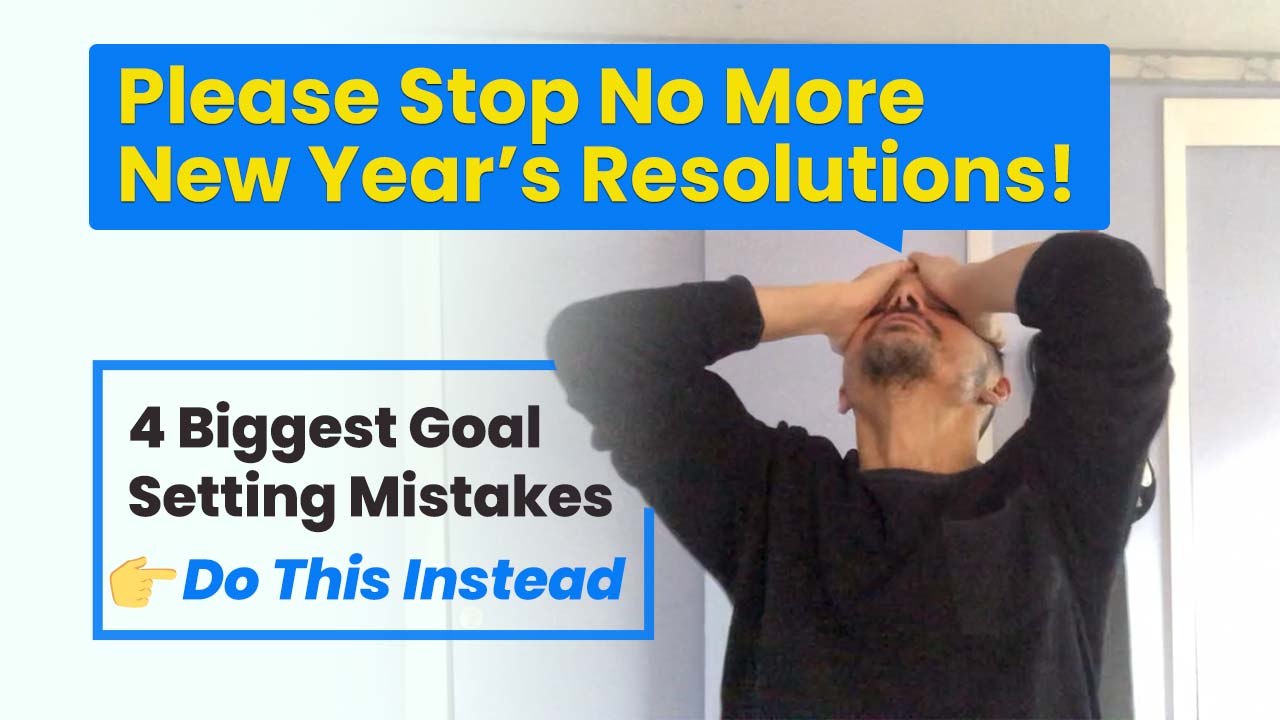
According to US News & World Report, 80% of New Year’s Resolutions fail. After experimenting with and learning about various different goal-setting frameworks and methodologies over the past few years, New Year’s Resolutions while are all born out of good intentions have a minimal impact and value outside of making for a nice meme on social media.
And while this can be attributed to many factors, the main reasons most of us abandon our New Year’s resolutions before February are:
Let’s look at each one individually.
We become hyper-focused on specific outcomes and on the end-game more than our own identity. Such examples of this are trying to reach a certain body weight or get a promotion at our job. Focusing on a specific outcome can be defeating if you don’t achieve your goal quickly. In most cases, it takes time to achieve a specific outcome, and many people become frustrated and eventually give up before reaching their goal.
At their very nature, outcome-based goals expose us to feeling the ups and downs of chasing our desire result. And when we are at the down portion of the chase, we often feel like we are failing.
We become hyper-focused on the process of achieving our goal — fixated on the actions and the”doing.” Process-based goals can cause you to become obsessed with the mechanical steps of achieving the growth and change you are seeking. It focuses too much on execution and not enough on your state of being. There’s old-age wisdom that states:
“Who you are being is more important than what you are doing.”
There is more to be gained towards achieving your goals by creating your state of being than by any set of actions.
Additionally, process-based goals tend to eventually drain us because over time we exert a tremendous of energy working up the discipline each day to take these actions we have become fixated with.
And once we do reach our desired outcome, it will feel like we need to take a break from what we just put ourselves through which can make our results become fleeting.
We all have full schedules and get overwhelmed by the feeling of busyness. When that happens, we typically don’t have a lot of time left over at the end of the day to devote to accomplishing things that aren’t interesting or important to us. If we don’t feel connected to our resolution and it isn’t meaningful to us we are fighting an uphill battle. And if we aren’t motivated to make the changes required to achieve our goals, then we will be more likely to give up. Hence, we need a deeper purpose.
New Year’s Resolutions are the antithesis of a life vision. Resolutions in their very nature are goals that are set in a vacuum – they are disconnected, individual goals that have no correlation to a larger vision for our life. For example, we set goals like lose 30 pounds, get a new job, find romance without understanding what we truly want out of life and who we want to be.
All of our goals need to align with a higher life vision and purpose. This is where creating identity comes in because goals need to align with who you want to be.
Without a clear life vision:
A life vision gives you a North Star that you can move towards every day. It gives you a framework for planning all your goals, ensuring they are all aligned to your larger life purpose and are moving in the same direction.
Instead of resolutions and traditional goal setting, all true growth and transformation occur by focusing on upgrading your identity.
“True change is not behavior change, it’s not results change, it’s not process change its identity change.”
— James Clear
As touched on earlier, the first step is to change the focus from what you will do (actions, process, tasks, etc.) to the new identity you want to assume.
Because no matter how great of a plan or smart of a strategy you have, you first need a strong sense of self. To reach your goals you need to know who you are and what you’re capable of.
And then taking that awareness and defining what is the next greatest version of yourself you want to become.
This is a more structured process that starts with establishing a vision of the person you want to be deep into the future.
Instead of setting a goal to play guitar, make it to become a guitarist.
Instead of seeking to write a book seek to become a writer.
And the way to being something or becoming someone is through doing something.
So every time you sit down to write…
Every time you play the guitar…
Every time you practice these habits you are being a writer and a guitarist.
You are wiring in that new identity through habit-change.
In other words, our identity emerges out of the habits that we have.
“We first make our habits, then our habits make us.”
— John Dryden
So if you want to become someone new, you can begin to accumulate evidence for that identity by reinforcing it with a new habit, and over time the more evidence you have, the more likely you will become this new person.
While resolutions and traditional goal-setting are about getting you to make small changes, identity change is about getting you to believe something new about yourself – something possible about yourself.
Habits are not only the compound interest of self-improvement but more importantly of transformation.
So every new year ditch declaring resolutions and declare a new identity.
Walking the spiritual path?
Sign up for the You Are A Conscious Creator Newsletter which curates hand-picked wisdom and insights for living a more conscious and meaningful life.